Reference
Mexico's September 2026 Anti-Dumping Rulings on Chinese Imports
Six DOF final rulings set China anti-dumping duties on steel, aluminum, paperboard, polycarbonate and ammonium sulfate, by fracción, rate and date.
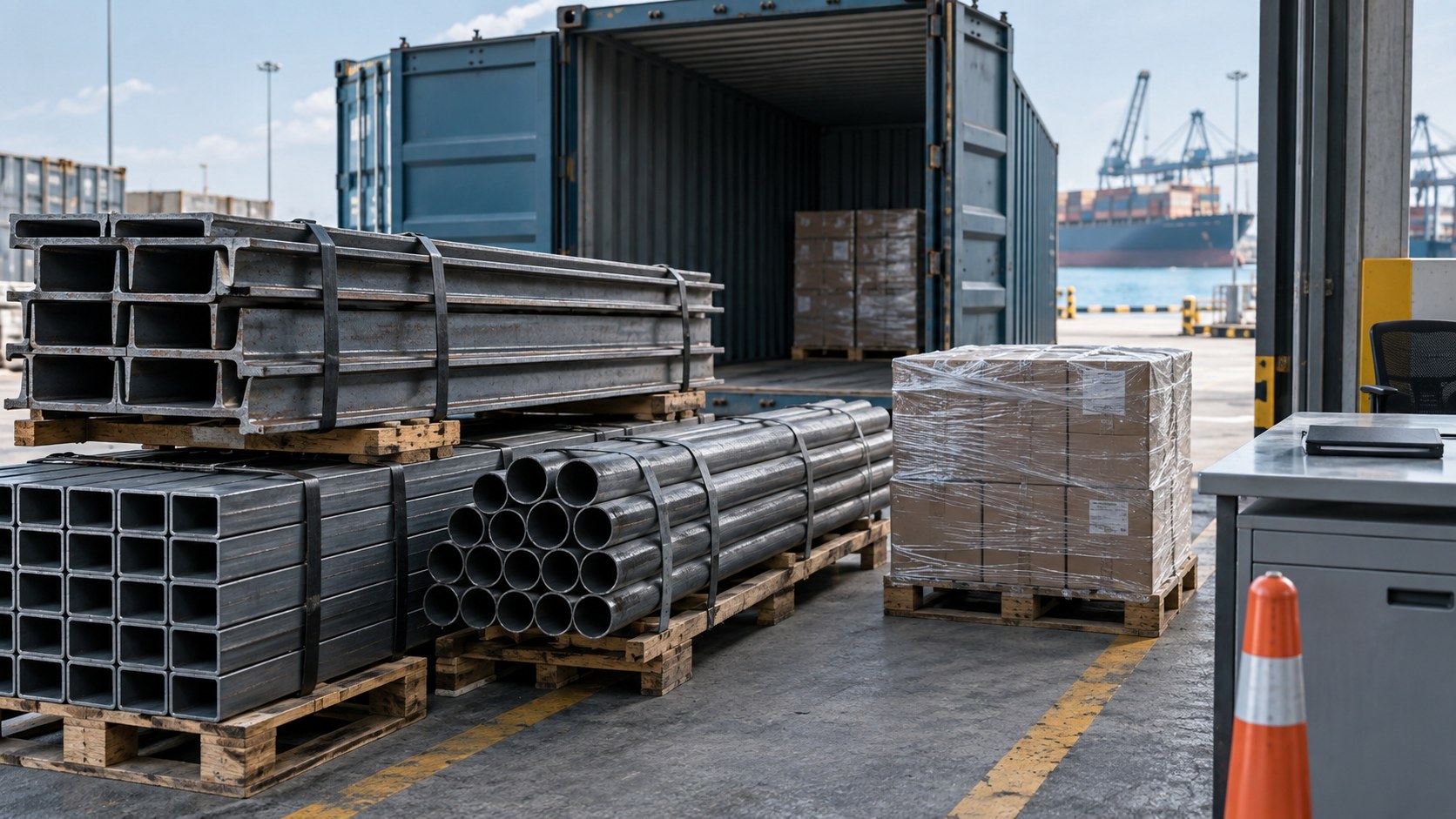
Between July and September 2026, Mexico’s Secretaría de Economía published six separate final rulings (resoluciones finales) imposing cuotas compensatorias definitivas — anti-dumping or countervailing duties — on Chinese-origin steel, aluminum profiles, paperboard, polycarbonate sheet and ammonium sulfate, with one aluminum ruling also naming the United States. Each is its own resolution, with its own product description, fracciones arancelarias, per-kilogram rate and effective date; none of them replaces or folds into the January 2026 tariff decree, and none is a category-wide “China surcharge.” Anyone sourcing these six product families now owes an extra, product-specific charge on entry, on top of the ordinary import duty and IVA.
Time-sensitive: these are the rates in force as verified below. A resolution can still be amended, clarified or reviewed later; check the live DOF text for your exact fracción before pricing a shipment.
Key takeaways
- Six separate resolutions, not one blanket measure: hot-rolled steel (China + Vietnam), aluminum profiles and bars (China), aluminum hollow profiles (China + United States), paperboard/cartoncillo (China), polycarbonate sheet (China) and ammonium sulfate (China).
- Each duty is a specific charge in US dollars per kilogram, not a percentage of invoice value — it does not shrink because the supplier’s price is low.
- Company-specific rates exist for steel and paperboard; the other four products carry one flat rate per origin country.
- An importer only avoids the duty by proving non-covered origin — export routing through a third country does not qualify.
- These duties are separate from, and additional to, the general import duty (IGI) and Mexico’s 16% IVA — see Mexico’s 2026 tariff decree for the unrelated January decree, and how to check a cuota compensatoria for the resolution-level verification method this article assumes.
The six rulings at a glance
| Product | Main fracciones arancelarias (TIGIE) | Final rate (USD/kg) | DOF publication | Effective |
|---|---|---|---|---|
| Hot-rolled steel | 7208.10.03 and 19 related lines across 7208 / 7211 / 7225 / 7226 | China 0.3050–0.3087; Vietnam 0.2719–0.2855 | 2026-09-03 | 2026-09-04 |
| Aluminum profiles and bars | 7604.10.02, 7604.10.99, 7604.29.01, 7604.29.02, 7604.29.99 | 1.58 flat (China) | 2026-09-04 | 2026-09-05 |
| Aluminum hollow profiles | 7604.21.01 | China 1.93; United States 1.72 | 2026-09-04 | 2026-09-05 |
| Paperboard (cartoncillo) | 4810.13.07, 4810.29.99, 4810.32.01, 4810.39.99, 4810.92.01, 4810.99.99 | 0.2837–0.4854 (China, by producer) | 2026-07-08 | 2026-07-09 |
| Polycarbonate sheet | 3916.90.91, 3920.61.01, 3921.19.91, 3925.90.99 | 4.2301 flat (China) | 2026-07-08 | 2026-07-09 |
| Ammonium sulfate | 3102.21.01 | 0.1488 flat (China) | 2026-08-14 | 2026-08-15 |
Every rate above is the number stated in the resolution’s own operative paragraph, verified against the DOF text cited in the sources below. Use it as a starting point, then confirm the current status of the specific resolution — a later review, amendment or clarification can change a rate after this article’s lastVerified date.
Hot-rolled steel (aceros laminados en caliente)
The ruling covers flat hot-rolled iron or carbon/alloy steel — coils, plate, sheet, strip — up to 25.4mm thick, entering under 7208.10.03 and 19 related fracciones in chapters 7208, 7211, 7225 and 7226 (plus entries made under Regla Octava). It names two specific Chinese exporters — Shanghai Meishan Iron & Steel (0.3087 USD/kg) and Wuhan Iron & Steel (0.3050 USD/kg) — a rate for other Chinese exporters that appeared in the case but were not individually examined (0.3070 USD/kg), a residual rate for all other Chinese exporters (0.3087 USD/kg), and three parallel rates for Vietnam (0.2719–0.2855 USD/kg).
Who this affects: steel service centers, coil processors, and manufacturers buying flat hot-rolled stock for further forming — not finished steel products classified elsewhere.
Exemption mechanism: an importer who can prove the actual country of manufacture is neither China nor Vietnam does not owe the duty, regardless of which country the goods shipped from. Proof follows Mexico’s general non-preferential rules-of-origin agreement, not a commercial invoice alone.
Declaring it: the pedimento must carry the correct fracción, the exporter’s name (to pick up a company-specific rate where one applies) and, where origin is being claimed outside China/Vietnam, the supporting certificate of origin.
Aluminum profiles and bars (perfiles y barras de aluminio)
A single flat rate — 1.58 USD/kg — applies to all Chinese-origin aluminum profiles and bars entering under 7604.10.02, 7604.10.99, 7604.29.01, 7604.29.02 or 7604.29.99, with no company-specific split.
Who this affects: window, door and curtain-wall fabricators, and furniture makers who buy extruded aluminum profile stock rather than finished frames.
Exemption mechanism: same non-China-origin proof as above — a certificate of origin under the general rules-of-origin agreement, not routing through a third country.
Declaring it: the pedimento states the fracción and net weight; the cuota compensatoria is calculated on that weight regardless of invoice value.
Aluminum hollow profiles (perfiles huecos de aluminio)
This is the one ruling with two named origin countries: 1.93 USD/kg for China and 1.72 USD/kg for the United States, both entering under fracción 7604.21.01. The investigation examined US and Chinese imports together, so an importer buying this exact hollow-profile product from either country owes a duty — just a different rate depending on which one.
Who this affects: the same window/door/curtain-wall and furniture fabricators as above, specifically for hollow (tubular) profile shapes rather than solid bar or open profile.
Exemption mechanism: proving origin outside both China and the United States removes the duty; proving US origin instead of Chinese origin lowers it but does not remove it.
Declaring it: the pedimento must state which of the two named origins applies — the fracción alone does not determine the rate here.
Paperboard (cartoncillo)
Four named Chinese producers carry individual rates — Guangxi Jingui (0.4388 USD/kg), Jiangsu Bohui (0.2837 USD/kg), Ningbo Asia (0.4854 USD/kg) and Shandong Bohui (0.3909 USD/kg) — and every other Chinese exporter pays the residual rate of 0.4854 USD/kg, the same as Ningbo Asia’s. The ruling covers six fracciones in chapter 4810.
Who this affects: folding-carton converters, packaging printers and box manufacturers buying coated paperboard stock rather than finished cartons.
Exemption mechanism: the non-China-origin certificate route again; a paperboard mill’s country of manufacture, not the port it ships from, decides coverage.
Declaring it: naming the correct producer on the pedimento matters here more than on the flat-rate products above — it is the difference between 0.2837 and 0.4854 USD/kg.
Polycarbonate sheet (láminas de policarbonato)
One flat rate — 4.2301 USD/kg — applies to Jiangxi Polyrise and to every other Chinese exporter alike, across fracciones 3916.90.91, 3920.61.01, 3921.19.91 and 3925.90.99. This is the highest per-kilogram rate among the six rulings.
Who this affects: advertising and signage board fabricators, greenhouse and skylight glazing installers, and industrial-panel manufacturers buying sheet stock rather than finished panels.
Exemption mechanism: same non-China-origin proof; because the rate is high relative to typical sheet values, misclassifying the origin carries a larger cost than on the lower per-kilogram products.
Declaring it: the pedimento fracción and declared net weight drive the charge; there is no producer-specific rate to select here.
Ammonium sulfate (sulfato de amonio)
A single rate of 0.1488 USD/kg applies to Chinese-origin ammonium sulfate entering under fracción 3102.21.01. The resolution’s own text notes this rate is lower than the full calculated dumping margin — Mexican law allows a “lesser duty” where a smaller charge is still enough to remove the injury found, and the Secretaría applied that here.
Who this affects: fertilizer blenders, agricultural-input distributors and importers of bulk nitrogen fertilizer inputs.
Exemption mechanism: the same non-China-origin certificate mechanism as the other five rulings.
Declaring it: fracción and net weight on the pedimento; no producer-specific split to track.
Where the compensatory duty sits in landed cost
A cuota compensatoria is a specific charge per kilogram, not a percentage of invoice value, so it behaves differently from IGI in the cost stack rather than simply adding to it:
- It is assessed alongside IGI, on the pedimento, using the declared net weight and the resolution’s own rate — it does not replace or reduce whatever general import duty the fracción already carries.
- Mexico’s general 16% IVA is then calculated on the import base set by Article 27 of the Ley del Impuesto al Valor Agregado: the value used for the general import duty (IGI), plus that duty itself, plus any other contribuciones y aprovechamientos owed because of the import. A cuota compensatoria is exactly that kind of aprovechamiento, so it enters the IVA base by statute, not by an administrative shortcut — a higher compensatory duty therefore raises the IVA amount due as well. Confirm the exact figure with your customs broker before pricing a shipment.
- DTA (the customs processing fee) is a separate charge unaffected by whether a cuota compensatoria applies.
- Because the duty is per-kilogram rather than per-value, its share of landed cost is largest on low-value, heavy shipments of the affected product and comparatively smaller on light, high-value goods in the same fracción.
None of this replaces classifying the exact fracción and confirming the current resolution status first — the duty amount above only applies once the product, origin and pedimento line actually match the resolution’s coverage.
How this fits a DDP quote
A DDP quote that has not asked what the product is, its exact fracción and its verified country of origin has not priced a cuota compensatoria correctly — where one of these six rulings applies, it can be a larger line than the ordinary duty and IVA combined. Customs clearance runs through the customs brokers we work with; Best Shipping is not a licensed customs broker or importer of record. For a customer without their own Mexican import qualifications, we can help arrange a compliant import structure, but the eligible importer of record, the applicable fracción and rate, and overall feasibility are confirmed per shipment on WhatsApp before booking — not assumed from a product category.
Frequently asked questions
Do these rulings replace the January 2026 tariff decree? No. They are separate, unrelated proceedings. The January 2026 decree set general tariff rates by fracción; these six rulings add a further, product-specific anti-dumping or countervailing charge on top of whatever general duty already applies.
My fracción is close to one of these six but not listed here — am I covered? Not automatically. Each resolution lists its own exact fracciones and product description; a neighboring fracción or a visually similar product is not covered unless the resolution’s own text says so. See how to check a cuota compensatoria for the shipment-level verification method.
Can I avoid the duty by shipping through a third country? No. All six rulings tie the duty to the country where the goods were actually manufactured, verified through a certificate of origin under Mexico’s general rules-of-origin agreement — not the country of dispatch or transshipment.
Does a DDP quote already include the compensatory duty? Only once we know the exact product, fracción and verified origin. Because the charge is per kilogram rather than a percentage, it must be calculated from the actual shipment, never assumed from the general product category.
Where can I read the resolutions myself? Each is cited in full below with its DOF publication date and URL. The operative paragraphs near the end of each resolution — not the summary at the top — state the exact fracciones, named exporters and final rate.
The bottom line
Six separate 2026 rulings put a specific, per-kilogram anti-dumping or countervailing duty on Chinese-origin steel, aluminum profiles, paperboard, polycarbonate sheet and ammonium sulfate — one aluminum ruling also covers the United States. None of them is a general “China tariff”: each stands on its own fracciones, rate and effective date, and each is avoided only by documented non-covered origin, never by routing. Send us the product, its proposed fracción and country of manufacture on WhatsApp, and we will confirm which of these rulings — if any — applies before you book.
Sources
- RESOLUCIÓN final — aceros laminados en caliente (China y Vietnam)Diario Oficial de la Federación
- RESOLUCIÓN final — perfiles y barras de aluminio (China)Diario Oficial de la Federación
- RESOLUCIÓN final — perfiles huecos de aluminio (Estados Unidos y China)Diario Oficial de la Federación
- RESOLUCIÓN final — cartoncillo (China)Diario Oficial de la Federación
- RESOLUCIÓN final — láminas de policarbonato (China)Diario Oficial de la Federación
- RESOLUCIÓN final — sulfato de amonio (China)Diario Oficial de la Federación
- Ley del Impuesto al Valor Agregado — Artículo 27 (base gravable en importación)Orden Jurídico Nacional (Secretaría de Gobernación)
Services
Part of
Tools for this topic